Detroit District Regulatory Division
Jurisdiction - Michigan
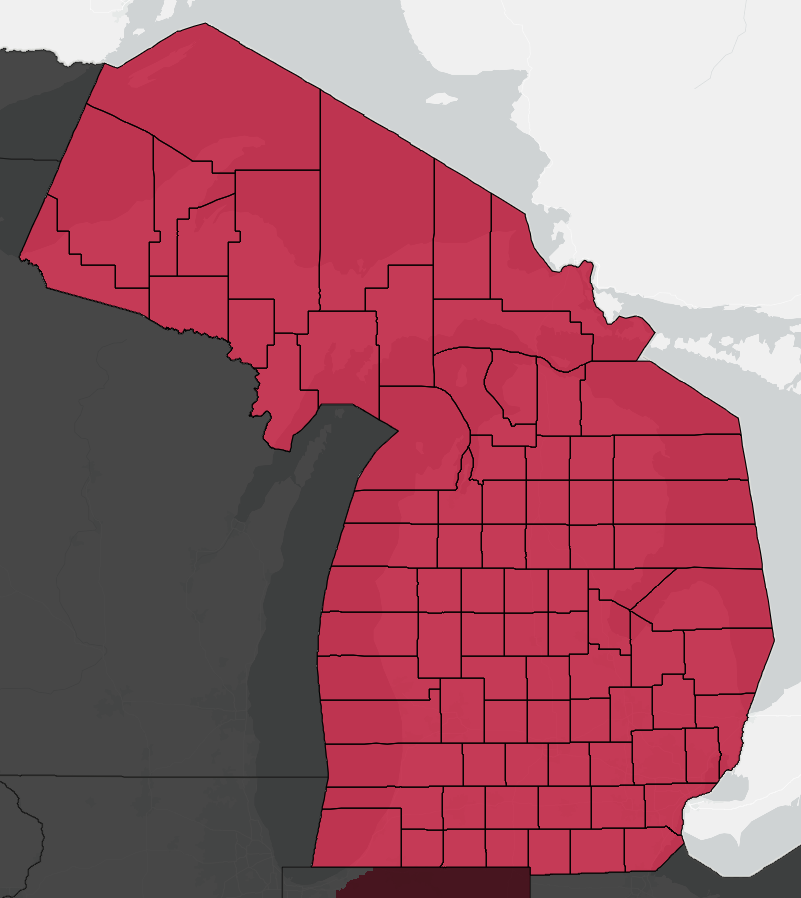
The Detroit District oversees regulatory authority across the entire state of Michigan under Section 10 and Section 404 of the Clean Water Act.
For details on jurisdiction—such as which waters fall under Corps authority—visit the
About Jurisdiction page.
Permit Types
Find permitting information, application procedures, and helpful resources for your project in this jurisdiction.
Visit https://rrs.usace.army.mil/rrs/home/permitting to learn about the types of permits USACE issues.
Nationwide Permits
(PAL collection for all NWPs in this jurisdiction)
Regional General Permits
(PAL collection for all RGPs in this jurisdiction)
Programmatic General Permits
(PAL collection for all PGPs in this jurisdiction)
Letters of Permission
(PAL collection for all LoP in this jurisdiction)
Apply
The Detroit District uses a joint permit application process in coordination with the Michigan Department of Environment, Great Lakes, and Energy (EGLE). Most projects in Michigan require only one permit application to satisfy both state and federal requirements.
Prepare Your Application
Before applying, review the joint permit application instructions provided by EGLE:
Joint Permit Application Instructions (PDF)
Submit Your Application
Processing & Timeline
Applications are reviewed on a first-come, first-served basis. The Detroit District aims to issue a decision within 60 days of receiving a complete application.
Pre-application coordination is encouraged for large or complex projects.
Coordination Requirements
Some projects require coordination with additional agencies before receiving authorization.
Water Quality Certification (Section 401)
A Michigan EGLE-issued Section 401 Water Quality Certification may be required for activities involving discharges into state waters.
Endangered Species Act (ESA)
Coordination with the U.S. Fish and Wildlife Service may be needed if the project could impact listed species or critical habitat.
Historic Properties (NHPA Section 106)
Projects affecting historic or cultural resources may require review with the Michigan SHPO or Tribal Historic Preservation Office (THPO).
Section 408 Review
If your project impacts a Corps civil works structure (like a dam or levee), separate authorization may be required under Section 408. Learn more on the
Section 408 Program page.
Compensatory Mitigation
If unavoidable impacts to aquatic resources occur, mitigation may be required. For further guidance, see the
About Mitigation page.